Counselling
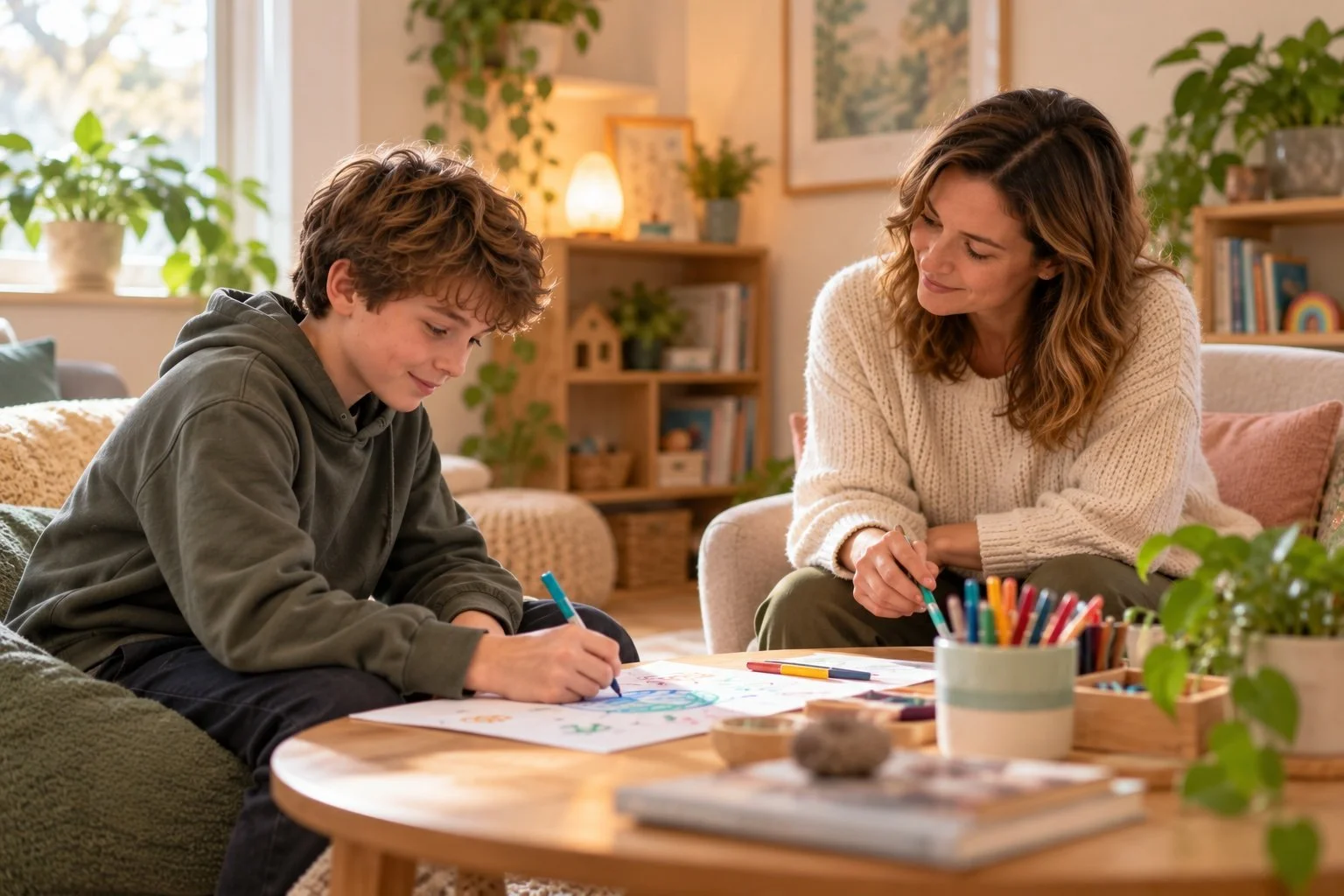
Counselling provides children and young people with a supportive space to explore what is happening for them, make sense of their emotions and experiences, and develop skills that support their wellbeing. Sessions are shaped around the individual and may include conversation, creative and experiential approaches, play and practical strategies.
A space to be understood
Our Story
Sometimes children and young people need a space where they can slow things down, make sense of what they are experiencing and feel heard without pressure to have all the answers. Counselling provides an opportunity to explore thoughts, feelings, relationships and challenges within a safe and supportive therapeutic relationship.
Counselling that meets the young person where they are
Counselling doesn’t need to look the same for every person. Some young people prefer to talk, while others find it easier to connect while drawing, creating, playing a game or doing something alongside the conversation.
Sessions are flexible and shaped around the individual. Depending on their age, needs and preferences, counselling may draw on conversation, creative and experiential activities, mindfulness, play and practical strategies that support emotional awareness, regulation and coping.
How can counselling help?
Counselling can support children and young people experiencing a wide range of emotional, relational and everyday challenges. Together, we can build understanding of what is happening, explore what feels difficult and develop ways of responding that support greater confidence, wellbeing and resilience.
Anxiety, worry and overwhelm
Emotional regulation and big emotions
Neurodivergence, including autism and ADHD
School difficulties and school refusal
Friendships and relationships
Confidence, self-esteem and identity
Grief, loss and family change
Trauma and difficult life experiences
What does the process look like?
01. Initial consultation
We begin with an initial consultation to talk about what has been happening, what support you are looking for and what might be most helpful. For younger clients, this will usually involve a parent or carer.
03. Staying Connected
For children and younger teens, parent or carer check-ins can help us stay connected around how things are going outside of counselling, while still respecting the young person’s need for privacy and a therapeutic space of their own.
02. Counselling Begins
Counselling sessions provide a regular space to explore what is happening and work towards the goals that are important to the young person. Sessions are flexible and shaped around their age, needs, interests and preferred ways of engaging.
04. Review the process together
As counselling progresses, we review how things are going, what changes are being noticed and whether the young person’s needs or goals have shifted. Together, we consider what ongoing support will be most helpful.
Counselling that understands neurodiverse brains
Neurodivergent children and young people may experience the world differently, including how they process emotions, sensory information, relationships, expectations and everyday demands.
Counselling provides space to understand these experiences without seeing difference as something that needs to be fixed. Together, we can explore what contributes to overwhelm, recognise individual strengths and needs, and develop ways of supporting regulation, communication, confidence and self-understanding.
My approach is neurodivergent-affirming and focuses on working with the young person’s brain and nervous system, rather than expecting them to simply try harder to fit into environments that may be difficult for them.
Practical Information
Session Length
Counselling sessions are approximately 45 minutes long and are tailored to the age, needs and individual preferences of the young person.
Are parents involved?
Parent or carer involvement will depend on the young person’s age and individual needs. For younger clients, regular parent check-ins can be an important part of the process, while also respecting the young person’s privacy and their need for a therapeutic space of their own.
How often are sessions?
Regular sessions provide consistency and help build a strong therapeutic relationship. The frequency of sessions can be discussed based on the young person’s needs and circumstances.
How long will counselling continue?
There is no set number of counselling sessions, as every young person’s needs and circumstances are different. We will review progress over time and consider together what ongoing support will be most helpful.
Wondering whether counselling might be right for your child or young person?
You don’t need to know exactly what kind of support your child or young person needs before getting in touch. You’re welcome to tell me a little about what has been happening, and we can consider together whether counselling may be a helpful next step.